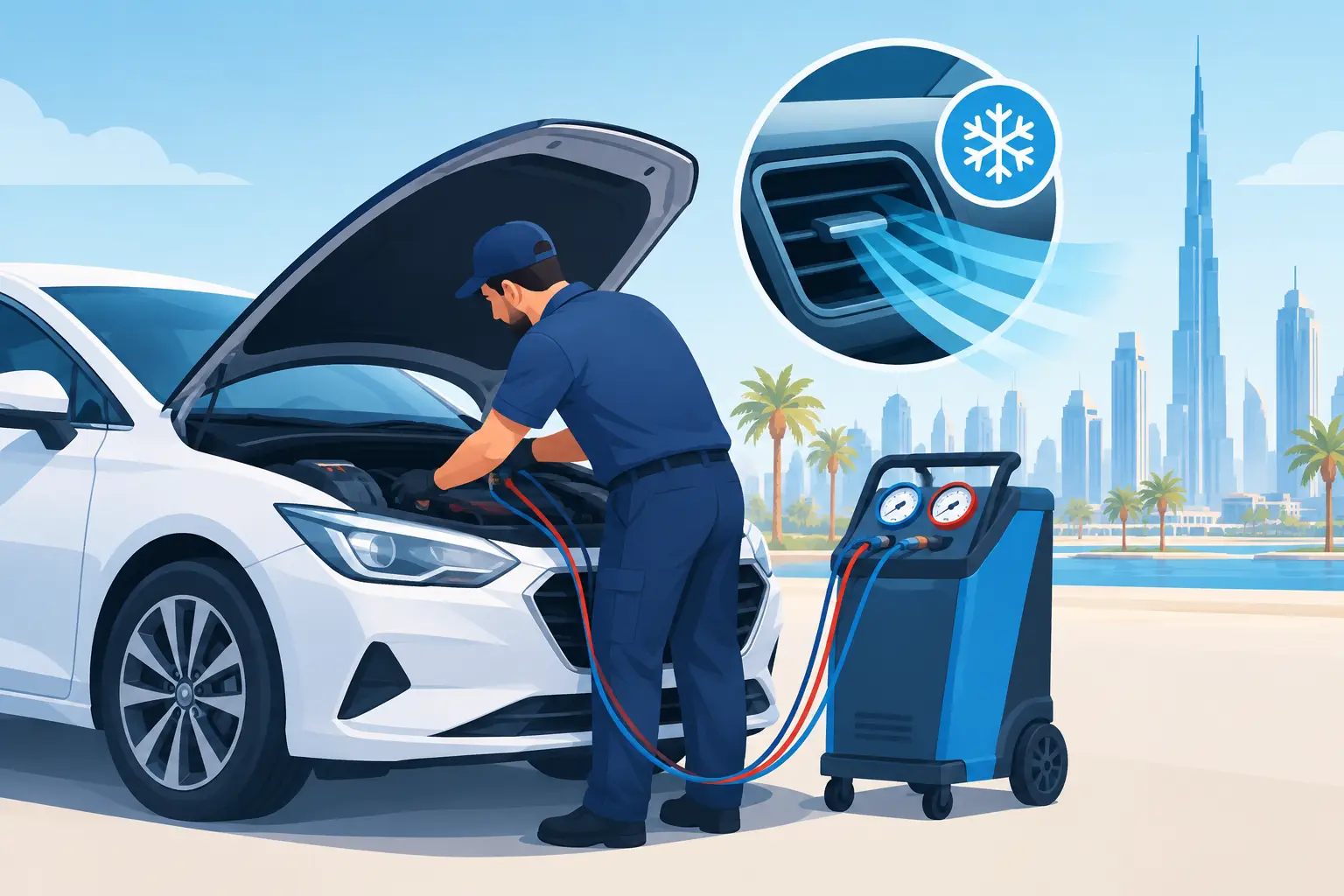
Short Answer: Yes. Running your AC does use gas, though the effect varies depending on driving conditions.
If you’ve ever wondered whether running your car’s air conditioning affects fuel consumption, you’re not alone. Many drivers notice a slight dip in mileage when the AC is on, but how much gas does it really use? In this article, we’ll break down how your car’s AC system works, how it impacts fuel efficiency, and when car AC repair in Dubai might be needed, along with practical tips to minimize fuel loss while staying cool.
How a Car AC System Works
A vehicle’s AC system might seem simple, but it has a unique mechanism designed to cool your vehicle efficiently. The system mainly consists of:
- Compressor: Powered by your engine, it pressurizes and circulates refrigerant.
- Condenser: Converts hot gas from the compressor into liquid refrigerant.
- Evaporator: Absorbs heat from the cabin air, cooling it before it circulates back inside.
- Expansion Valve: Regulates refrigerant flow and pressure.
Because the AC compressor is mechanically connected to the engine via a belt (or electrically in hybrids/electric vehicles), using the AC places an extra load on the engine. This is why running the AC can slightly reduce fuel efficiency; your engine works harder, consuming more gas.
Factors That Influence Fuel Consumption
Several factors determine how much gas your AC uses.
- Engine Type: Larger engines handle AC load better, with minimal fuel impact.
- Vehicle Age: Older cars or poorly maintained AC systems may increase fuel consumption.
- Temperature: Extremely hot conditions make the AC work harder.
- AC Settings: Using “max cool” or the blower at full speed consumes more fuel than moderate settings.
- Driving Conditions: Stop-and-go city traffic can lower fuel efficiency by 10 to 20%, while highway AC use is usually more efficient than driving with windows down.
Tips to Minimize Gas Usage While Staying Cool
You don’t have to choose between comfort and fuel efficiency. Here are some actionable strategies:
- Pre-Cool the Cabin: Park in the shade or ventilate your car before turning on the AC.
- Moderate Settings: Avoid max cooling and high fan speeds unless necessary.
- Maintain Your AC System: Regularly check refrigerant levels, clean filters, and service the system to ensure optimal efficiency.
- Use Recirculation Mode: This recycles already-cooled air, reducing the compressor load.
- Combine Strategies: On short drives, consider cracking windows instead of using AC at full blast.
Modern Vehicles and AC Efficiency
Electric and hybrid cars have different AC dynamics. Many modern cars, including hybrids, use an electric AC compressor that draws from the battery instead of the engine, so range can drop a little. In my own experience, scheduling timely Ferrari AC repair in Dubai has made a big difference in both comfort and efficiency. Similarly, fully electric vehicles use battery power for AC, affecting range rather than fuel consumption.
Conclusion
So, does a car AC use gas? Absolutely. Your car’s AC system relies on the engine, which increases fuel consumption slightly, especially in city driving or extreme temperatures. With regular maintenance and knowing how the car’s AC system works and keeps you cool, you can reduce its impact on mileage while staying comfortable. By understanding your AC system and implementing simple efficiency tips, you can enjoy cool air without worrying about excessive gas usage.
Frequently Asked Questions?
How can I tell if my car’s AC refrigerant is low?
A: If the AC blows warm air or cools unevenly, the system may be low on refrigerant.
Which consumes more fuel, using the AC or the heater?
A: Running the AC generally uses more fuel than the heater, especially in city driving.
How frequently should a car’s AC system be refilled?
A: Most car ACs need a recharge every 2 to 3 years, or sooner if cooling is weak.