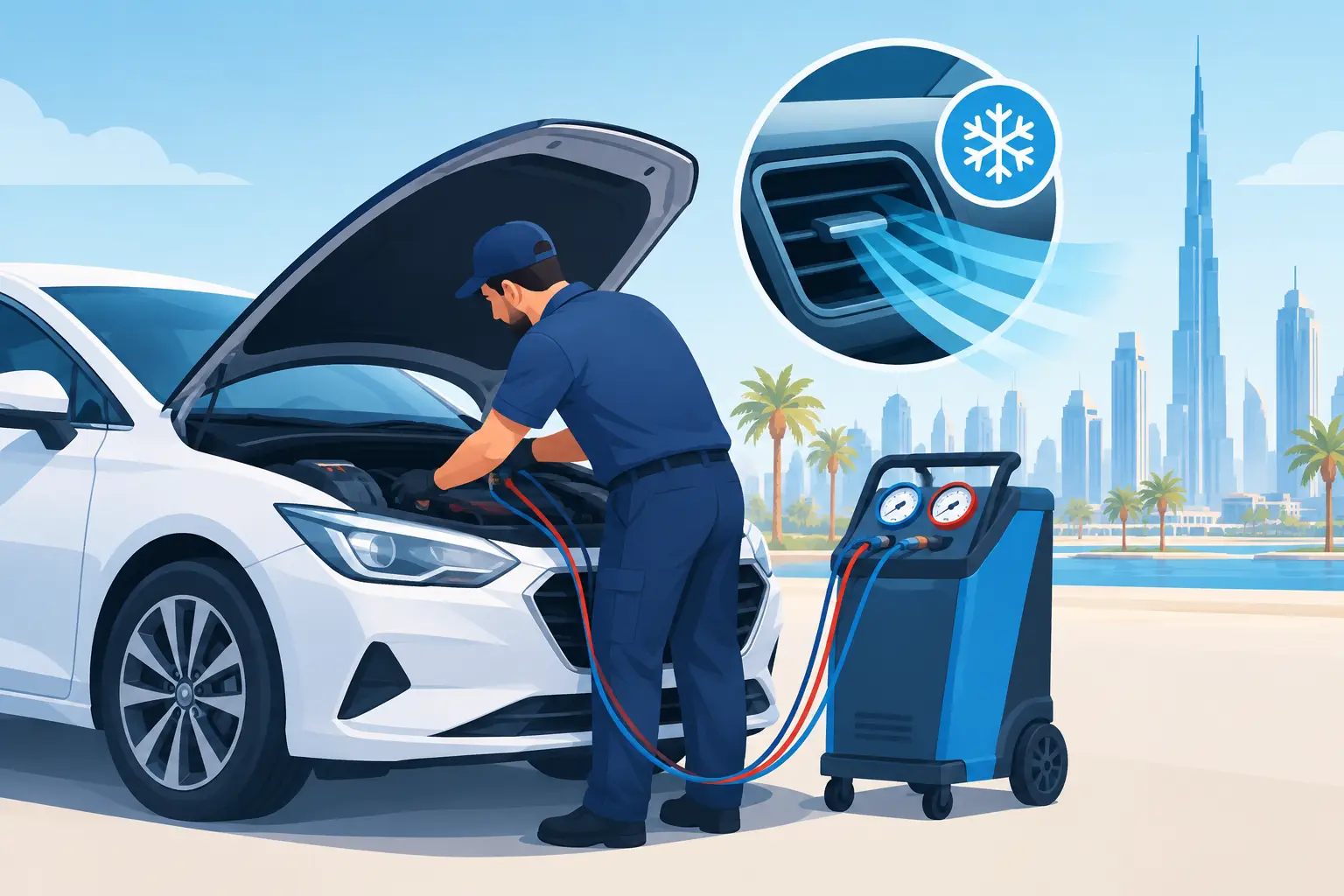
When your car AC compressor not working turns a short drive through Dubai into a heat test, the problem usually shows up fast. The air gets warm, cabin cooling drops, and the system may start making noises it never made before. In this climate, that is not a small inconvenience – it is a repair that needs proper diagnosis before other AC components are affected.
Why the compressor matters so much
The compressor is the heart of the air conditioning system. It pressurizes and circulates refrigerant through the condenser, expansion valve, and evaporator so the cabin can actually cool. When it fails, cooling either becomes weak or stops completely.
Some drivers assume warm air always means low gas. Sometimes that is true, but not always. A compressor can fail mechanically, the clutch can stop engaging, the control valve can malfunction, or an electrical issue can prevent operation even when the refrigerant level is acceptable. That is why accurate testing matters more than guesswork.
In Dubai, compressor issues also tend to escalate faster because AC systems work hard for most of the year. Long idle times in traffic, high ambient temperatures, and neglected maintenance all add stress to the system.
Signs your car AC compressor is not working
A failed compressor rarely hides for long. In most vehicles, the symptoms are obvious once you know what to watch for.
The most common sign is warm air from the vents even when the AC is switched on and set to maximum cooling. Another frequent symptom is intermittent cooling – cold air for a few minutes, then warm air, then cold again. That often points to pressure imbalance, clutch problems, or internal compressor wear.
Noise is another clue. Grinding, rattling, squealing, or clicking from the compressor area can mean bearing damage, clutch failure, or internal seizure. If the compressor pulley is noisy even with the AC off, that is a separate warning that should not be ignored.
You may also notice the compressor clutch does not engage at all. On some cars, especially German and luxury models, the system may store fault codes related to pressure sensors, temperature sensors, or compressor regulation. In newer vehicles, a bad compressor may not just affect cooling – it can trigger protection mode in the climate control system.
What causes compressor failure
Low refrigerant or leaks
A compressor depends on correct refrigerant pressure and oil circulation. If the system has a leak, the compressor can run under stress or shut down to protect itself. A refill without leak testing is often a temporary fix, not a repair.
Electrical faults
Blown fuses, damaged wiring, bad relays, failed pressure switches, or sensor issues can stop the compressor from turning on. This is common in vehicles where the AC system is electronically managed through modules rather than simple on-off switches.
Worn clutch or control valve
Some compressors fail because the clutch no longer engages. Others, especially variable displacement units used in many modern European cars, have control valve problems that mimic full compressor failure. That matters because in some cases, the fix is smaller and cheaper than full replacement.
Internal mechanical damage
If the compressor has seized or started shedding metal particles internally, the repair becomes more involved. In that situation, replacing only the compressor is risky. The system may also need condenser service, line flushing, expansion valve replacement, and a receiver drier change to prevent contamination from ruining the new unit.
Poor previous repairs
This is more common than many car owners realize. Incorrect gas charge, non-compatible oil, cheap parts, or skipping system cleaning after a compressor failure can lead to repeat breakdowns. On premium vehicles like BMW, Mercedes, Audi, Porsche, Range Rover, and Jaguar, brand-specific procedures matter.
Car AC compressor not working – what should be checked first?
A proper diagnosis starts with pressure readings, visual inspection, and electronic testing. The technician should confirm whether the compressor is receiving the correct command to engage, whether refrigerant pressure is within range, and whether there are leaks or blockages elsewhere in the system.
The clutch gap may need inspection on older compressor setups. On newer vehicles, scan tool data is just as important as physical checks because the climate module, engine ECU, and pressure sensors often work together. If the system has shut the compressor down for self-protection, replacing parts before reading the data can waste time and money.
Oil condition is another major clue. If the recovered refrigerant oil shows metallic debris, the compressor may have failed internally. At that point, a complete system cleanup is not optional.
Repair or replace? It depends on the failure
Not every compressor problem means full compressor replacement. If the issue is a relay, fuse, pressure sensor, wiring fault, or control valve, the repair can be more targeted. If the clutch is the only failed part and the compressor body is still healthy, some vehicles allow clutch repair separately.
But if the compressor has seized, is leaking badly from the shaft seal, or has contaminated the AC system with debris, replacement is usually the safer route. The trade-off is cost versus reliability. A partial repair may look cheaper upfront, but if contamination remains in the system, the replacement compressor can fail again.
For high-end cars and supercars, this decision needs extra care. Compressor access can be time-consuming, parts quality matters more, and calibration or refrigerant charging procedures may be model-specific. Using genuine OEM or high-grade aftermarket parts is often the difference between a stable repair and a repeat visit.
Why compressor problems get worse in Dubai
Dubai is not forgiving to a weak AC system. Extreme heat increases cabin pull-down demand, which means the compressor works harder and longer. Stop-and-go driving in areas like Business Bay, Dubai Marina, Downtown, Al Barsha, JVC, Motor City, and Mirdif puts even more load on the system because airflow across the condenser drops when the car is moving slowly.
That is why a compressor issue that feels minor in the morning can become severe by afternoon. Weak cooling, overpressure conditions, and fan-related problems all show up faster here. For SUVs, luxury sedans, and larger vehicles with rear AC systems, the strain can be even greater.
Don’t confuse compressor failure with other AC faults
A lot of systems get misdiagnosed because the symptoms overlap. Weak cooling can come from a bad condenser fan, clogged cabin filter, dirty evaporator, stuck expansion valve, low refrigerant, or blend door issue. Some customers are told the compressor is bad when the real problem is electrical control. Others replace the compressor and still have poor cooling because the condenser is restricted or the fans are underperforming.
That is why specialist AC diagnosis matters. A workshop focused on AC systems will test the whole circuit, not just the most expensive part.
What a proper compressor repair process should include
If the compressor is confirmed faulty, the repair should not stop at parts replacement. The system needs correct refrigerant recovery, contamination checks, component inspection, vacuum testing, precise gas charging, and final vent temperature and pressure verification.
If debris is found, flushing and related component replacement may be required. If the issue came from a leak, the leak source must be repaired before recharging. If the problem is electrical, the repair should include wiring or sensor correction and retesting under load.
At Car AC Repair in Dubai, this kind of process is exactly why specialist handling matters. Whether the vehicle is a Toyota, Nissan, Ford, BMW, Mercedes, Porsche, Range Rover, Bentley, or Ferrari, the goal is the same – fix the cause, protect the full AC system, and restore consistent cooling you can rely on every day.
When to book the car in immediately
If the compressor is making noise, the belt area smells burnt, cooling has stopped completely, or the AC keeps cutting in and out, do not keep running the system and hope it clears up. That can turn a simpler repair into a full system cleanup.
The same applies if you recently topped up gas and the cooling did not improve for long. Repeated refills without diagnosis usually mean an unresolved leak, pressure issue, or compressor control problem.
For drivers in Al Wasl, Jumeirah, Palm Jumeirah, JLT, DIFC, Arabian Ranches, Silicon Oasis, Springs, and nearby Dubai areas, fast diagnosis saves both time and parts cost. The earlier the system is tested, the better the chance of avoiding secondary damage.
A car AC compressor problem is rarely the kind of fault that rewards delay. If the cooling has changed, the noises have started, or the compressor is not engaging, get the system checked properly and get ahead of the heat before it gets ahead of you.