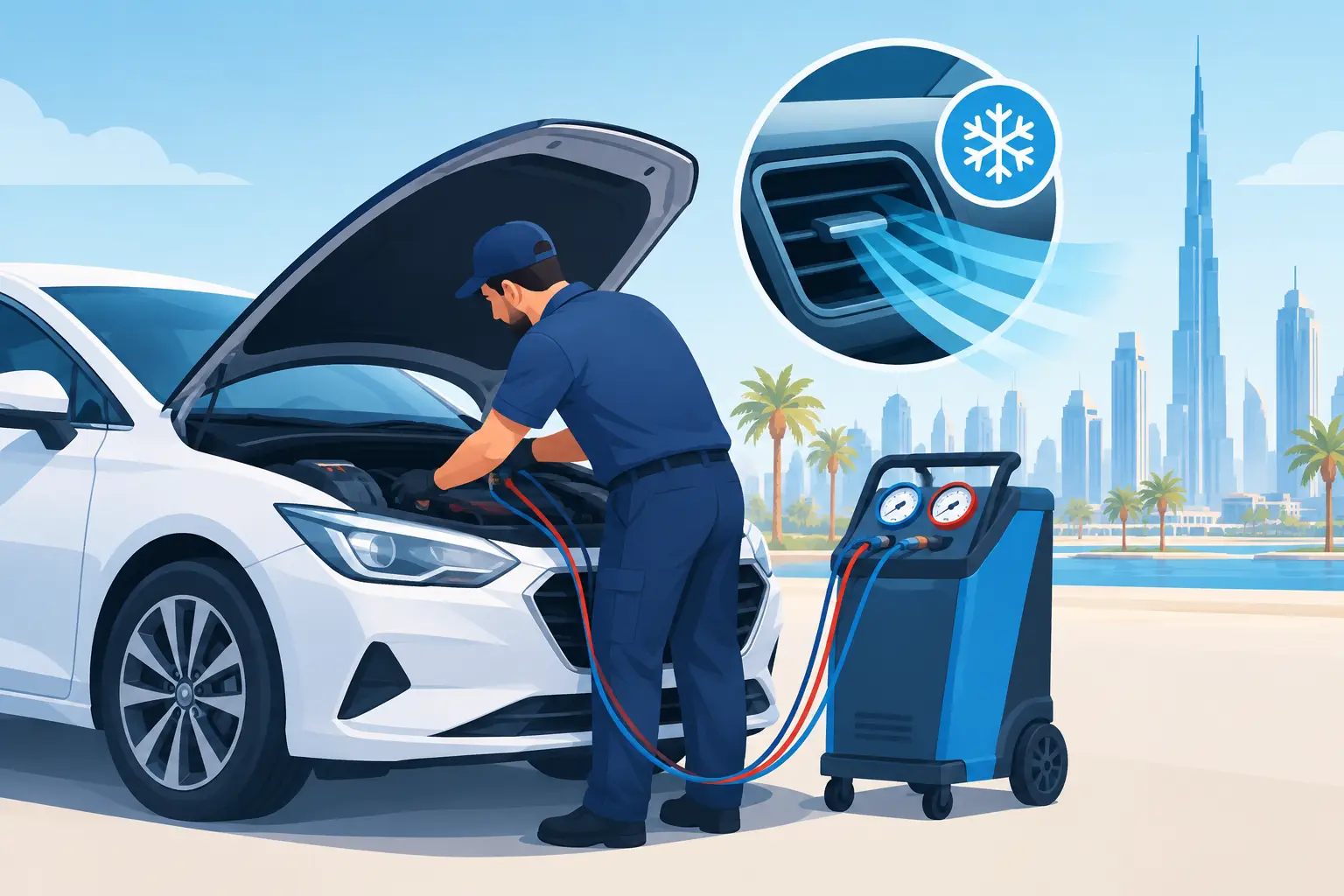
You notice it fastest at the first traffic light – the cabin stops cooling, the air turns weak, and Dubai heat starts pushing through the vents. Most causes of car aircon malfunction do not begin with a complete breakdown. They usually start with small warning signs such as reduced cooling, strange smells, inconsistent airflow, or extra noise when the AC is on.
That matters because a minor AC issue can quickly become an expensive repair in this climate. A weak blower motor may seem manageable for a few days. A small refrigerant leak may still give some cooling in the morning. But under constant heavy use, especially in Dubai traffic, those smaller faults put extra strain on the compressor, pressure lines, condenser, and electrical controls. The result is simple – delay often turns a repair into a larger job.
The most common causes of car aircon malfunction
Some AC problems are mechanical, some are electrical, and some come down to contamination or lack of maintenance. The system works as a chain. If one part starts failing, the performance of the whole system drops.
Low refrigerant or an AC gas leak
This is one of the most common reasons a car AC stops cooling properly. Refrigerant does not get used up like fuel, so if levels are low, there is usually a leak somewhere in the system. It could be at an O-ring, hose connection, condenser, compressor seal, or evaporator.
The first sign is often air that feels cool but not cold enough. Then cooling fades further, especially during idling or peak afternoon heat. A refill without leak detection may restore performance briefly, but it will not solve the actual fault. Proper diagnosis matters because repeated low refrigerant operation can damage the compressor.
Compressor failure or weak compressor performance
The compressor is the heart of the AC system. It pressurizes the refrigerant and keeps cooling circulating through the system. When it begins to fail, you may notice warm air, clicking noises, poor cooling at idle, or the AC cutting in and out.
Some compressors fail completely. Others become weak over time, which is harder to catch unless the system is tested properly. In premium German cars, SUVs, and performance vehicles, compressor issues can also be tied to control valves, pulley faults, clutch problems, or internal contamination. That is why replacing parts without pressure testing and system inspection can lead to the wrong repair.
Condenser blockage or damage
The condenser sits at the front of the vehicle, which makes it vulnerable to road debris, dust buildup, and impact damage. In Dubai, that front-end exposure matters even more because heat load is already high. If airflow through the condenser is blocked or the condenser is leaking, the system cannot release heat efficiently.
This usually shows up as AC that cools poorly when stationary or during slow driving. In some cases, the air gets cooler once the car is moving at higher speed because airflow improves. A bent, clogged, or leaking condenser often needs more than a quick clean – it needs proper inspection to confirm whether service or replacement is the right move.
Faulty cooling fans or blower motor problems
There are two separate airflow issues drivers often confuse. The first is the radiator or condenser fan, which helps remove heat from the AC system. If that fan is not working correctly, the AC may struggle badly at idle. The second is the cabin blower motor, which pushes cold air through the vents.
If the blower motor is weak, noisy, or intermittent, the evaporator may be cold but the cabin still does not feel properly cooled. If the condenser fan fails, pressure can rise too high and cooling drops sharply in traffic. Both faults affect comfort, but they need very different repairs.
Causes of car aircon malfunction that start with poor maintenance
Not every AC problem begins with a major failed component. A neglected system often creates the conditions for bigger failures later.
Dirty cabin air filter and blocked airflow
A clogged cabin filter restricts airflow through the vents. Drivers often assume the AC gas is low because the cabin does not cool well, when the actual problem is that cold air is not moving efficiently into the interior.
This is one of the simpler issues to fix, but it should not be ignored. Restricted airflow can make the system work harder than necessary and reduce overall comfort. In dusty driving conditions, filter service becomes even more important.
Evaporator contamination and mold buildup
The evaporator is where the air gets cooled before entering the cabin. Over time, moisture, dust, and bacteria can collect there. That often causes a musty smell first, then reduced cooling efficiency, and in some cases poor drainage or icing.
Cleaning the evaporator is not just about odor. A contaminated evaporator can affect airflow and system performance. In vehicles used daily across areas such as Dubai Marina, Business Bay, JLT, Al Barsha, Arabian Ranches, and Mirdif, frequent AC use means this component sees constant load.
Drain blockage and moisture issues
When the AC runs, condensation needs to drain out properly. If the drain line gets blocked, moisture can back up into the system or cabin area. You may notice damp carpets, bad smells, fogging, or water dripping somewhere it should not.
This may sound minor compared with compressor or condenser failure, but trapped moisture can create cabin discomfort and contribute to mold buildup. It is also a sign that the system needs attention before other issues follow.
Electrical and sensor faults behind AC failure
Modern car AC systems depend heavily on sensors, switches, control modules, and wiring. That is especially true in BMW, Mercedes, Audi, Porsche, Range Rover, Lexus, Cadillac, Jeep, Ferrari, Bentley, and other higher-spec vehicles where climate control is integrated with the car’s electronics.
Bad pressure switch, sensor, or relay
If the AC pressure switch sends the wrong signal, the compressor may not engage at all. If a temperature sensor reads incorrectly, the system may cycle improperly or stop cooling before the cabin reaches the selected temperature. A failed relay or blown fuse can create symptoms that look like major mechanical failure when the root cause is electrical.
This is where specialist diagnosis makes a difference. Guesswork wastes time and money. Reading live data, checking pressure values, and testing control circuits is the right way to isolate the fault.
Climate control panel or module issues
Sometimes the problem is not inside the refrigerant circuit. It is in the command side of the system. Faulty buttons, failed control heads, damaged wiring, or module communication errors can stop the AC from functioning correctly.
You may get inconsistent temperature from side to side, blower speed that changes by itself, vents that do not respond properly, or an AC system that turns on but does not cool as commanded. These issues are common on luxury and technology-heavy vehicles and often need brand-aware diagnostics rather than generic garage inspection.
When one symptom can mean different faults
This is where many owners lose time. Warm air does not always mean low gas. Weak airflow does not always mean a bad compressor. Noise does not always mean total compressor failure.
For example, poor cooling at idle could point to a condenser fan issue, a weak compressor, overpressure, or a condenser efficiency problem. A bad smell could come from the evaporator, cabin filter, or trapped moisture. Intermittent cooling might be caused by a sensor fault, wiring issue, or refrigerant pressure dropping at certain operating conditions.
That is why proper AC repair should start with inspection, leak testing, pressure checks, vent temperature reading, and electrical diagnosis where needed. Replacing parts based on assumption is how small AC jobs turn into repeated workshop visits.
What Dubai drivers should do when the AC starts failing
If your AC is cooling less than usual, do not wait for total failure. Early action usually means faster repair, lower cost, and less chance of damage spreading to major components. This is especially true for vehicles that spend long hours on the road or sit in direct sun across Palm Jumeirah, Downtown, JVC, Motor City, Silicon Oasis, Emirates Hills, and surrounding Dubai communities.
At Car AC Repair in Dubai, the right approach is straightforward – identify the real fault first, then repair only what the system actually needs. That may be a leak repair and gas refill, compressor service, condenser replacement, evaporator cleaning, blower motor repair, or control system diagnosis. The key is precision, not guesswork.
If your vents are blowing warm, airflow is weak, or the AC cuts out in traffic, treat it as an early warning, not a minor inconvenience. In Dubai heat, a healthy air conditioning system is part of how your car stays usable every day.