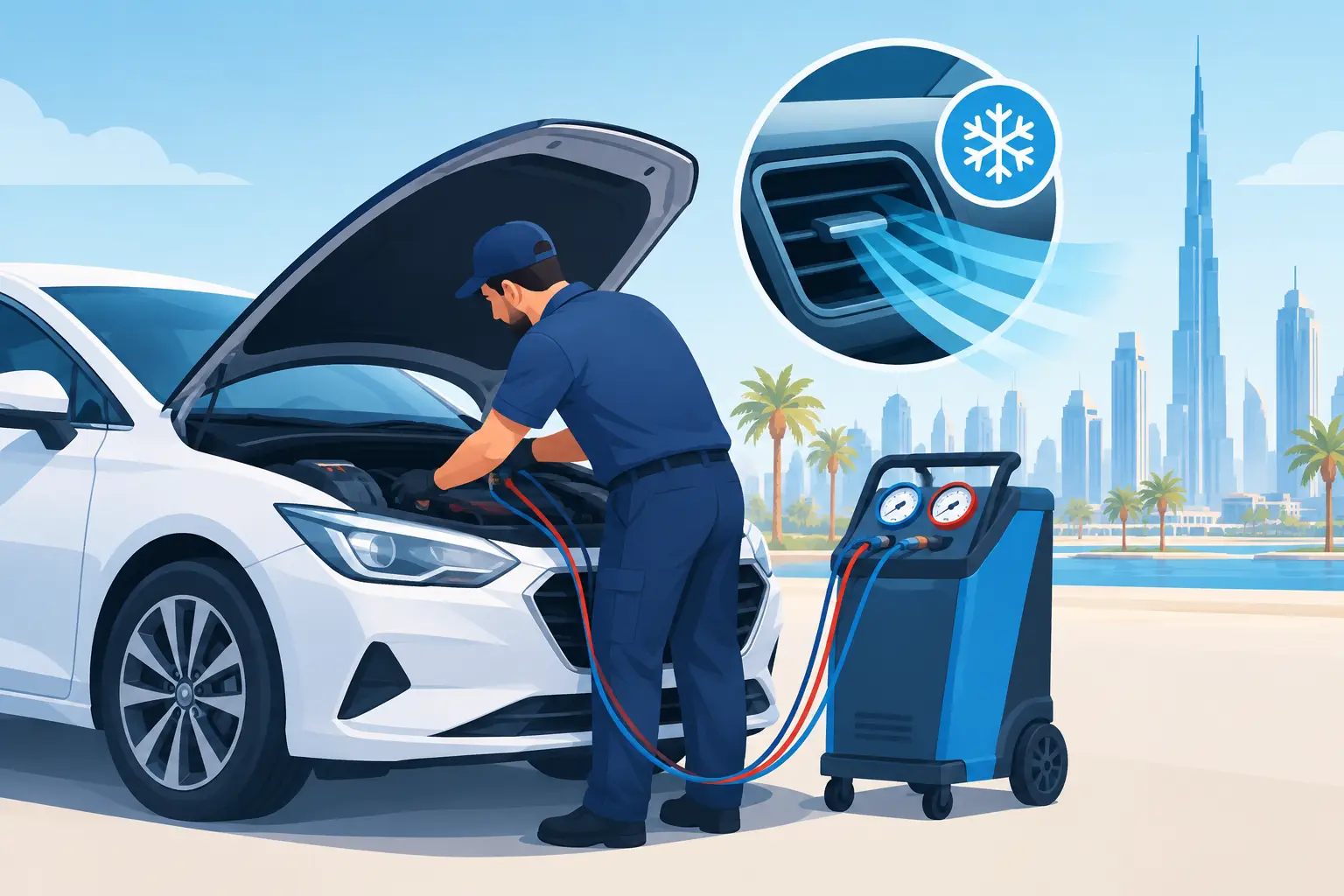
You notice it fast in Dubai. The AC is on, the blower is working, but the air coming from the vents is weak, warm, or only cool for a few minutes. If you are asking why does car AC stops cooling, the short answer is simple: something in the system is no longer doing its job properly, and in this heat, even a small fault shows up quickly.
Car AC problems rarely come from one universal cause. A low refrigerant charge, a failing compressor, a clogged condenser, a bad cooling fan, an electrical fault, or a dirty evaporator can all lead to the same complaint – the AC stopped cooling. The difference is in how the symptoms appear and how quickly the issue gets worse.
Why does car AC stop cooling in Dubai?
Dubai puts more stress on automotive air conditioning than most places. Long idling, stop-and-go traffic, high ambient temperatures, dust, and constant AC use push every component harder. A system that seems acceptable in mild weather can fail badly once summer load increases.
That is why many drivers notice a pattern. The AC may feel cold early in the morning, then struggle by noon. It may cool while driving but turn warm in traffic. In some cars, the passenger side stays colder than the driver side. In others, airflow is strong but the temperature is wrong. These details matter because they point to different faults.
A proper diagnosis is not just about adding gas and hoping for the best. In many cases, a refill without leak testing only delays the problem and can cost more later.
The most common reasons why does car AC stops cooling
Low refrigerant from a leak
This is one of the most common causes. Refrigerant does not get used up like fuel. If the level is low, there is usually a leak somewhere in the system. It could be from an O-ring, hose, condenser, evaporator, service port, or compressor seal.
When refrigerant drops, cooling performance falls with it. At first, the air may not feel as cold as before. Then the AC may cool intermittently. Eventually it starts blowing warm air most of the time. In Dubai, even a minor leak becomes obvious quickly because the system is under heavy demand.
Failing compressor
The compressor is the heart of the AC system. If it cannot circulate refrigerant at the correct pressure, the whole system loses cooling ability. Compressors can fail mechanically, electrically, or through clutch problems in certain models.
Sometimes the compressor still runs but does not build proper pressure. That creates a tricky situation where the AC appears active, yet cabin temperature never drops properly. On luxury and performance vehicles, compressor control systems can be more complex, so guessing is risky.
Dirty or blocked condenser
The condenser releases heat from the refrigerant. If it is clogged with dust, road debris, or bent fins, it cannot reject heat efficiently. The result is weak cooling, especially at low speed or while idling.
This is a common issue in dusty conditions and urban traffic. Many drivers think the AC gas is low, but the real problem is poor heat transfer at the condenser. That is why visual inspection and pressure testing matter.
Cooling fan problems
If the radiator fan or condenser fan is not working correctly, the AC often cools while driving and turns warm when the car stops. Airflow across the condenser is critical when the vehicle is stationary.
A weak fan motor, bad relay, blown fuse, control module fault, or wiring issue can all cause this. It is one of the clearest examples of why proper diagnosis saves time. Adding refrigerant will not fix a fan that is not spinning at full speed.
Clogged cabin filter or evaporator
Sometimes the issue is not temperature alone but airflow. A blocked cabin air filter restricts air entering the system, and a dirty evaporator can reduce both airflow and cooling efficiency. The AC may technically be producing cold air, but not enough of it reaches the cabin.
This can feel like the vents are underperforming even when the fan is on high. In dusty areas across Dubai, filters load up faster than many owners expect.
Electrical or sensor faults
Modern vehicles rely on pressure sensors, temperature sensors, climate control modules, actuators, and wiring networks. If one part sends the wrong signal, the system may shut down the compressor, mismanage blend doors, or deliver the wrong vent temperature.
This is especially relevant in German cars, Range Rover, Lexus, and other vehicles with advanced climate systems. The symptom may look simple – no cooling – but the cause can sit inside the control side of the system rather than the mechanical side.
Signs your AC problem is getting worse
A weak AC system usually gives warning signs before complete failure. You may hear clicking from the compressor area, notice a musty smell from the vents, see water leaking inside the cabin instead of draining outside, or experience cooling that comes and goes.
Another common sign is uneven cooling. If one side blows cold and the other side does not, you may be dealing with a blend door issue, sensor problem, or low refrigerant condition affecting system balance. If cooling drops only in traffic, the fan or condenser should be checked first. If cooling is poor all the time, compressor performance, refrigerant level, and internal restrictions become more likely.
Ignoring these signs usually makes the repair larger. A small leak can become compressor damage. A dirty condenser can increase system pressure. A blocked filter can overwork the blower motor.
Why a quick gas refill is not always the answer
Many drivers search for the fastest fix when the cabin gets hot, and that is understandable. But refrigerant top-up alone is not a full solution unless the system was verified to be low and leak-free. If the AC lost cooling because of a leak, the new charge will drop again. If the compressor is weak, pressure readings will show it. If the condenser fan has failed, cooling may still disappear in traffic.
This is where specialist repair matters. An AC-focused workshop tests pressures, checks vent temperature, inspects for leaks, evaluates compressor function, scans for faults, and confirms whether the issue is mechanical, electrical, or airflow-related. That approach is more reliable than trial-and-error repairs.
Why brand-specific diagnosis matters
Not every vehicle handles AC faults the same way. A BMW, Mercedes, Audi, Porsche, Range Rover, Ford, Nissan, or Cadillac can all show similar symptoms with very different root causes. Some compressors are electronically regulated. Some systems use multiple temperature sensors and blend doors. Some luxury SUVs have rear AC circuits that complicate diagnosis.
That is why specialist knowledge makes a difference. On premium and exotic vehicles especially, using the wrong part, overcharging refrigerant, or skipping proper calibration can create more problems than it solves. Precision matters, and so does using OEM or high-grade replacement parts when needed.
When to get your car checked
If your AC is blowing warm air, cooling only at speed, making unusual noise, producing bad smells, or losing performance day by day, it should be checked immediately. In Dubai, waiting is rarely a smart move. The longer the system runs with low refrigerant or poor pressure control, the greater the chance of damaging expensive components.
Drivers in Al Wasl, Jumeirah, Dubai Marina, Business Bay, Al Barsha, JLT, Downtown, Arabian Ranches, Mirdif, and nearby areas usually need one thing above all – a repair that is done properly the first time. That means accurate leak detection, compressor testing, condenser and evaporator inspection, filter and fan checks, and transparent advice on what truly needs replacement.
At Car AC Repair in Dubai, this is exactly why specialist AC service matters more than a general garage approach. Fast diagnosis is helpful, but complete diagnosis is what protects your comfort and your budget.
What to do next if your car AC stopped cooling
Start with the basics. Notice whether the issue happens all the time or only in traffic. Check if airflow is weak or if the airflow is strong but not cold. Listen for unusual sounds when the AC is turned on. Pay attention to smells, dashboard warnings, and any recent changes in engine temperature.
Then stop guessing. The right fix depends on the actual fault, and with AC systems, similar symptoms often come from very different causes. A proper inspection now is usually the cheapest point to solve it.
When your car AC stops cooling in Dubai, comfort is not the only issue. Clear diagnosis, correct parts, and experienced repair are what keep a small AC problem from turning into a major one.