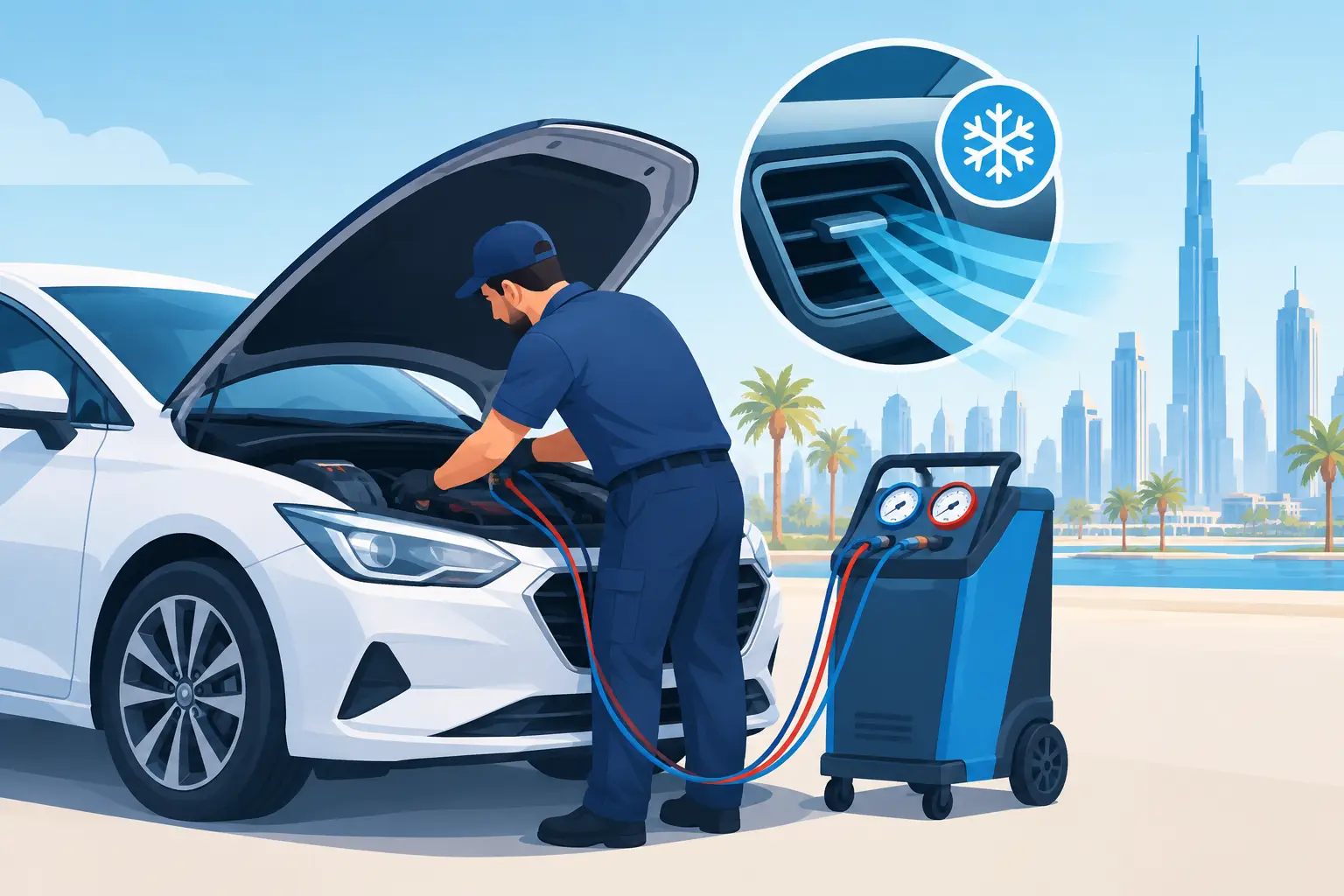
You notice it fast in Dubai. The air from the vents starts warm, cooling takes too long, or the AC cuts out when you are stuck in traffic on Sheikh Zayed Road. When that happens, understanding the main reasons for car ac not working can save you time, prevent bigger damage, and help you avoid paying for the wrong repair.
Car AC systems are not simple. A weak cooling problem might come from low refrigerant, but it can also come from a failing compressor, blocked condenser, damaged fan, electrical fault, or even a dirty cabin filter. The right fix depends on proper diagnosis, especially on modern BMW, Mercedes, Audi, Porsche, Range Rover, Lexus, Jeep, Nissan, and other vehicles with brand-specific climate control systems.
Most common reasons for car AC not working
The most common cause is refrigerant loss. Car AC systems are sealed, so if the gas level is low, there is usually a leak somewhere in the system. That leak may be coming from an O-ring, hose connection, condenser, evaporator, or compressor seal. Many drivers top up refrigerant and think the issue is solved, but if the leak is still there, the cooling will drop again.
A bad compressor is another major reason. The compressor is the heart of the AC system. It circulates refrigerant and maintains pressure. If the compressor clutch fails, if internal components wear out, or if the unit seizes, the system may blow warm air or stop cooling completely. In some cases, you may hear clicking, grinding, or belt-related noise before total failure.
A blocked or damaged condenser can also reduce cooling sharply. In Dubai, dust, road debris, and heat put extra stress on condensers. If airflow across the condenser is restricted, the refrigerant cannot release heat properly. The result is weak AC, especially when idling or moving slowly. This is why some cars cool better on the highway than in city traffic.
Cooling fan failure is closely related. If the radiator fan or condenser fan is not working at the right speed, high-side pressure rises and cabin cooling suffers. This often shows up as AC that works while driving but turns warm at a stoplight. That pattern is a useful clue and should not be ignored.
Electrical problems are another frequent source of trouble. A blown fuse, bad relay, damaged wiring, failed pressure switch, or faulty AC control module can stop the system from engaging. On newer luxury vehicles, climate control issues may also involve sensors, actuators, or control panel communication faults. These problems cannot be confirmed by guesswork. They need proper testing.
Reasons for car AC not working that drivers often miss
Not every AC complaint starts with the compressor or refrigerant. A clogged cabin air filter can restrict airflow so badly that the AC feels weak even when the system is cooling correctly. If air barely comes through the vents, the issue may be airflow rather than temperature. Replacing the filter is simple, but ignoring it can strain the blower motor over time.
The blower motor itself can fail or work intermittently. When that happens, you may get cold air inside the system but not enough air into the cabin. Sometimes the blower only works on one speed. Sometimes it stops completely. A faulty resistor, control module, or wiring issue may be part of the problem.
An evaporator problem is another overlooked cause. If the evaporator is dirty, blocked, or leaking, cooling performance drops and cabin odor may develop. In some cars, evaporator leaks are difficult to spot because they are hidden deep inside the dashboard area. That is why leak detection with the right tools matters.
There is also the expansion valve or orifice tube. These parts control refrigerant flow. If they become restricted or fail, pressure readings go out of range and cooling becomes inconsistent. You may notice AC that starts cold and then fades, or one that cools unevenly depending on engine load and outside temperature.
Why Dubai heat makes AC problems worse
In milder climates, a weak AC system might go unnoticed for weeks. In Dubai, small faults show up fast. Extreme ambient temperatures put more pressure on compressors, seals, condensers, and cooling fans. A system that is already low on refrigerant or partially blocked may still seem acceptable in the morning, then struggle badly by midday.
Stop-and-go traffic makes things worse. When the car is idling in areas like Business Bay, Dubai Marina, JLT, Al Barsha, Downtown, or Jumeirah, the AC depends heavily on fan performance and condenser efficiency. If either one is weak, vent temperature rises quickly. This is why many drivers describe the problem as random when it is actually load-related.
Luxury and performance vehicles can be even more sensitive. German and exotic models often use more complex climate systems, multiple sensors, and tightly calibrated pressure ranges. A general garage may refill gas and send the car out, but that does not fix a pressure control issue, sensor fault, or compressor regulation problem.
Signs your car needs AC diagnosis right away
If the AC is blowing hot air, that is obvious. But there are earlier warning signs. Cooling that takes too long, airflow that weakens after a few minutes, unusual smells from the vents, water leaking into the cabin, rattling noise when AC is turned on, or temperature changes between driver and passenger sides all point to a system problem.
Short cycling is another red flag. If the compressor keeps switching on and off too quickly, the system may have low refrigerant, a pressure issue, or an electrical control problem. Ignoring that can lead to compressor damage, which is far more expensive than fixing the root cause early.
It also matters if the AC was recently regassed but the cooling did not last. That usually means the original issue was not just low refrigerant. It was a leak or component fault that was never properly diagnosed.
What proper AC diagnosis should include
A real diagnosis is more than adding gas and checking if the vents feel cooler. The system should be inspected for leaks, pressure readings should be tested, compressor operation should be confirmed, condenser airflow should be checked, and electrical controls should be scanned where applicable. On premium vehicles, sensor data and module communication may also need review.
UV dye, nitrogen pressure testing, and electronic leak detection all have their place. The right method depends on the symptom and the vehicle. That is why accurate diagnosis is not one-size-fits-all. A Jeep with weak cooling may need a different approach than a Mercedes S-Class or a Porsche Cayenne with multi-zone climate control.
This is also where parts quality matters. If a condenser, compressor, fan, or expansion valve needs replacement, OEM or high-grade aftermarket parts make a difference in long-term performance. Cheap parts can create repeat failures, poor cooling, and unnecessary return visits.
When repair is simple and when it is not
Some AC issues are straightforward. A dirty cabin filter, worn relay, low refrigerant from a minor service-port leak, or faulty blower resistor may be fixed quickly. Other jobs are more involved, especially if the dashboard must be removed for evaporator work or if compressor failure has contaminated the system with debris.
That contamination point matters. If a compressor breaks internally, the system often needs more than a compressor replacement. The lines may need flushing, the receiver drier or accumulator may need replacement, and the expansion device may need to be changed as well. Skipping those steps can ruin the new compressor.
So yes, it depends. Two cars can have the same symptom and need very different repairs. That is exactly why specialist AC work delivers better results than guess-based repairs.
Why specialist repair matters for lasting results
For Dubai drivers, AC is not a comfort extra. It is a daily operating requirement. Whether you drive a Toyota in Mirdif, a Range Rover in Emirates Hills, a BMW in DIFC, or a Porsche in Palm Jumeirah, the goal is the same – restore strong, stable cooling and make sure it stays that way.
A specialist workshop will focus on the AC system itself, not treat it as a side job. That means better fault tracing, brand-aware repair procedures, correct refrigerant handling, proper leak testing, and cleaner installation standards. Car AC Repair in Dubai handles these issues with that specialist approach, which is exactly what vehicles in this climate need.
If your AC is weak, inconsistent, noisy, or blowing warm air, the smartest move is not to wait for full failure. Small AC faults become bigger ones under Dubai heat. Getting the system checked early usually costs less, protects major components, and gets you back to reliable cooling faster.
A car should cool properly every time you start it. If it does not, there is always a reason – and the right diagnosis is what turns a temporary fix into a real one.