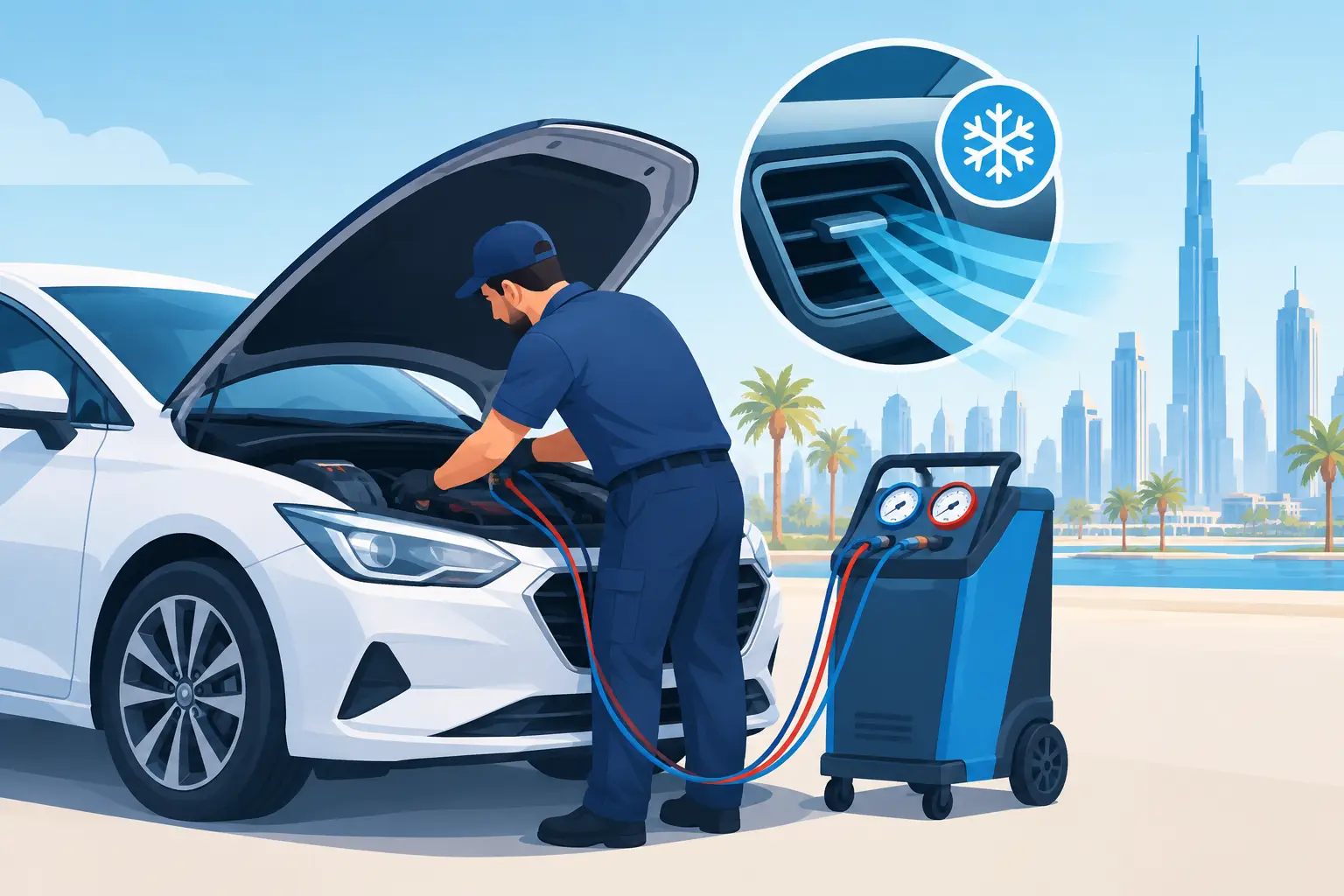
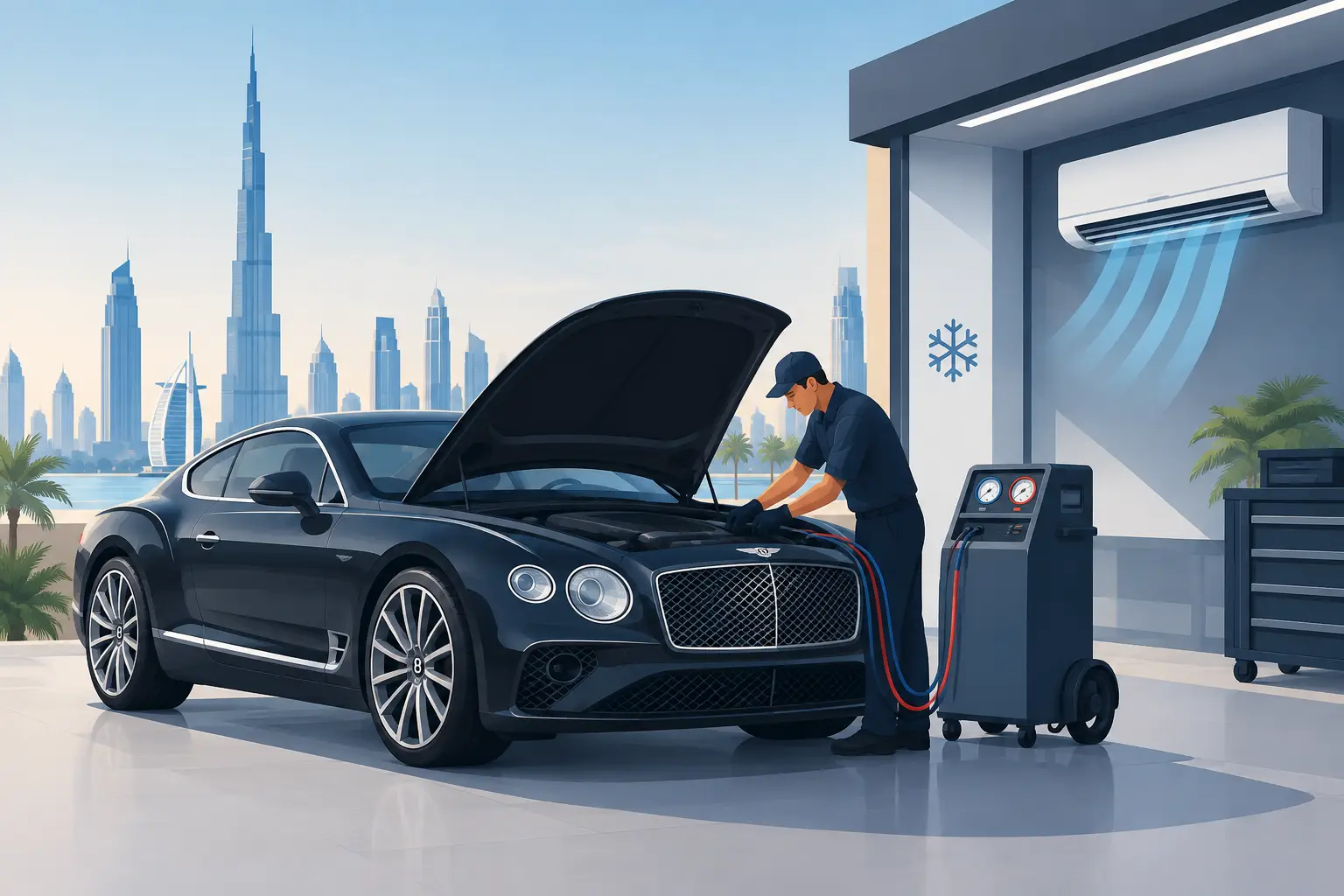
Dubai’s climate can be relentlessly hot. With temperatures often soaring above 45°C, your car’s air conditioning moves beyond luxury and becomes much more critical.
Audi understands this demand for consistent, high-performance cooling and meets it with cutting-edge technology across its fleet. Whether driving a traditional gas-powered Audi or the fully electric Audi e-tron, staying cool and comfortable is a priority.
But did you know how these two AC systems work is quite different?
In this blog, we’ll explain how the Audi e-tron’s AC system operates, compares to gas-powered counterparts, and why those differences matter regarding repair, maintenance, and long-term performance.
How the Audi e-tron AC System Works (vs. Traditional Gas Systems)
The Audi e-tron uses an electric-driven compressor powered directly by the high-voltage battery. It doesn’t rely on engine power, which can deliver cooling even when the car is idling or off.
This electric compressor also works in tandem with the vehicle’s thermal management system, which regulates battery and cabin temperature for maximum efficiency and range.
In contrast, traditional gas-powered Audi models (and most combustion-engine vehicles) use a belt-driven AC compressor that draws power from the engine. The compressor turns when the engine does, and refrigerant is circulated through the system using engine rotation.
This limits cooling performance when the car is stopped or idling, especially under extreme heat.
But the differences between these two systems don’t stop there.
Key Differences Between Electric and Gas AC Systems
1. Power Source and Dependency
Electric AC systems, like those in the Audi e-tron, run independently of the engine. This allows uninterrupted climate control, even when the vehicle is stationary. Gas-powered systems depend on engine RPM to power the compressor, so cooling is weaker during idling or slow driving.
2. Thermal Management Integration
Electric vehicles like the e-tron use AC systems as part of a broader thermal management strategy that cools the cabin and the battery and electric motor components. Gas-powered cars focus AC performance primarily on cabin comfort, with little integration with other critical vehicle systems.
3. Compressor Type
The e-tron uses a high-voltage, variable-speed electric compressor that adjusts based on cabin and system demands. Gas vehicles typically use a fixed or variable-displacement mechanical compressor driven by belts, which are more prone to wear and mechanical issues over time.
4. Maintenance and Repairs
Electric AC systems are sealed and electronically controlled, which reduces the frequency of leaks and belt failures. However, diagnosing issues may require specialized tools and expertise. In contrast, gas AC systems may be easier to service mechanically but tend to experience more wear and tear due to their reliance on engine-driven components.
5. Energy Consumption
AC systems in electric cars pull energy directly from the battery, which can impact range. However, smart controls and thermal strategies in models like the e-tron optimize this usage. Gas AC systems consume fuel indirectly by increasing engine load, which can reduce fuel efficiency, especially in traffic-heavy conditions like Dubai.
Common Issues in Electric and Gas AC Systems
Just like their functionality, these two types of ACs also differ in their causes of failure.
Among common causes for Audi e-tron AC problems is electric compressor failure, often caused by software glitches, voltage irregularities, or internal wear. Another frequent problem is thermal system miscommunication, where the climate control struggles to balance cabin and battery cooling demands, especially in high-heat environments like Dubai.
In gas-powered Audi models and traditional combustion-engine cars, refrigerant leaks are among the most widespread AC issues, often due to worn seals, cracked hoses, or degraded O-rings. Compressor clutch failure is another common problem, especially in older models, where the belt-driven system experiences more mechanical stress.
Additionally, faulty blower motors or clogged cabin filters can reduce airflow, making it seem like the AC isn’t cooling properly. These systems are more mechanical, so issues often involve physical wear rather than software or sensor faults.
How Electric vs. Gas AC Repairs Differ
To get a satisfactory Audi AC repair in Dubai, it is important to know how the repair differs for both systems.
Repairing an electric AC system like the Audi e-tron requires specialized knowledge and equipment. Since these systems involve high-voltage components, technicians must follow strict safety protocols and use insulated tools.
Diagnosing issues often involves software-based scans and calibration procedures, especially when dealing with control modules or integrated thermal systems. Parts like the electric compressor or electronic expansion valve are complex and typically more expensive to replace, but they also tend to be more durable when maintained correctly.
In contrast, gas AC systems are generally more mechanical and easier to service using conventional tools. Repairs often involve tasks like replacing worn-out belts, recharging refrigerant, or fixing leaks in the lines.
These systems are typically easier to access, and many garages can handle them without advanced diagnostic equipment. However, they may require more frequent maintenance due to the added strain from engine-driven components and moving parts.
Which System Is More Efficient and Why?
Regarding pure cooling performance, both systems are engineered to handle extreme heat, especially in premium brands like Audi.
However, electric AC systems tend to be more efficient overall.
This is because they’re digitally managed, provide on-demand cooling, and eliminate mechanical losses associated with belt-driven components.
That said, efficiency isn’t just about cooling but also about how much energy or fuel is consumed to deliver that performance. The e-tron’s smart thermal integration lets it cool the cabin, battery, and electronics while maintaining energy balance, making it more efficient in the long run.
Gas-powered systems, though effective, rely on more moving parts and constant engine power, which can be wasteful, especially during frequent short trips or stop-and-go traffic.
Conclusion
Understanding the differences between electric and gas AC systems is crucial, especially when living in a climate as intense as Dubai’s. Audi’s innovation in the electric space, particularly with the e-tron, proves that you don’t have to compromise on comfort just because you drive electric.
Still, these technical differences also mean repair and maintenance requirements vary greatly, and choosing the right specialists becomes essential.
Need AC Repairs for Your Audi?
Whether you drive an Audi e-tron or a traditional gas-powered model, Car AC Repair in Dubai is equipped to handle all your AC service needs. Our technicians are trained to provide top-notch car AC repair in Dubai for electric and gas systems, using advanced diagnostics and genuine parts to keep your cooling system running at peak performance.
Book your AC inspection today and beat the Dubai heat before it beats your car!