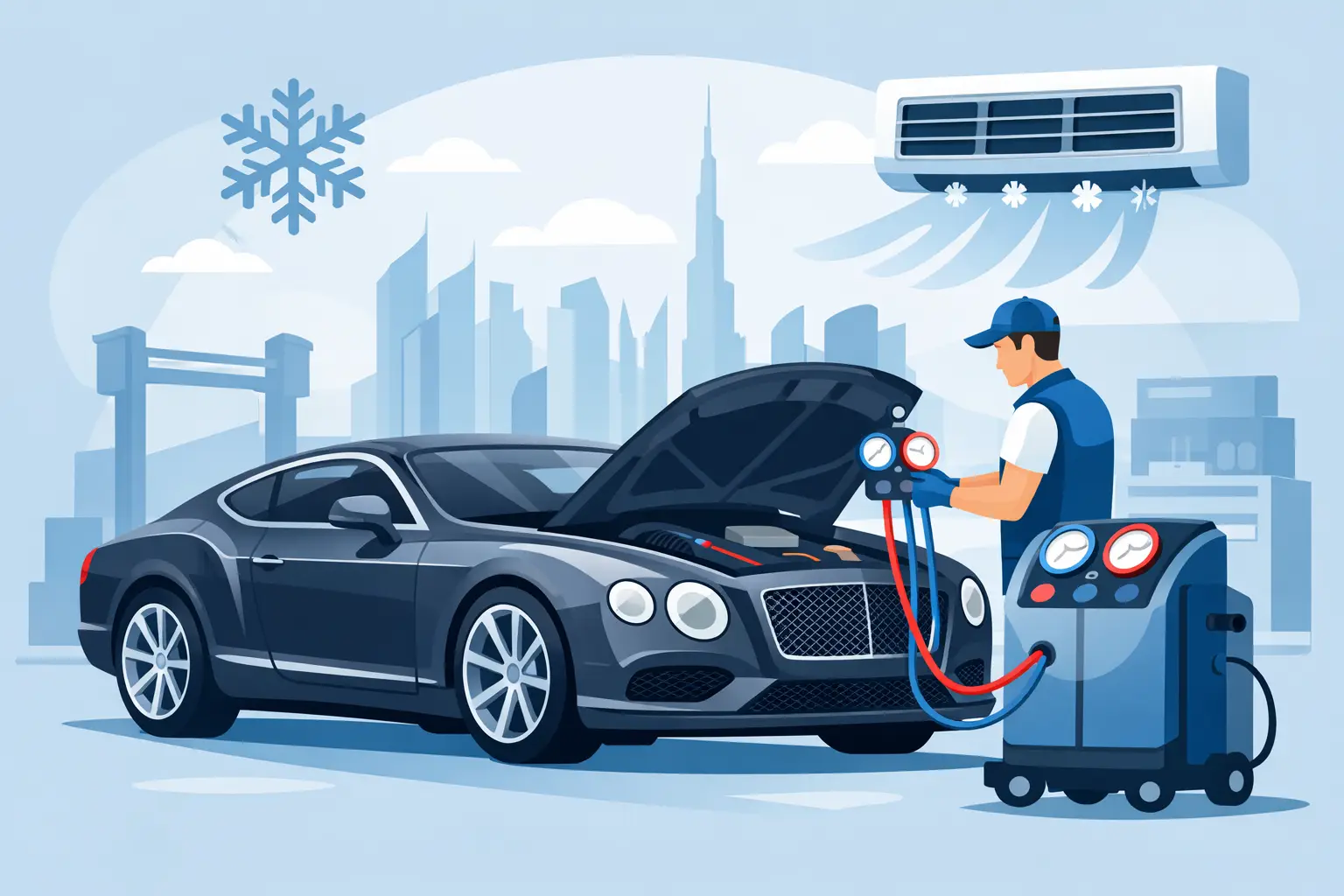
A weak AC system is not a minor inconvenience when you are driving through Dubai traffic in peak heat. It can turn a short trip from Dubai Marina to Business Bay into an uncomfortable, distracting drive. Professional auto ac repair finds the real source of the problem – not just the quickest temporary fix – so your cabin cools fast, stays cool, and protects the components that keep your system running.
At Car AC Repair in Dubai, we work exclusively on vehicle air conditioning systems. That focused approach matters whether you drive a Nissan, Toyota, BMW, Mercedes-Benz, Range Rover, Porsche, Jeep, Cadillac, Ferrari, or Rolls-Royce. Modern vehicle AC systems are complex, and the correct repair depends on accurate testing, brand-specific knowledge, and parts that meet the right standard.
When Your Car Needs Auto AC Repair
Most AC failures give warning signs before the system stops cooling completely. Acting early can often prevent a small leak, worn fan, or dirty evaporator from becoming a compressor failure.
Watch for these common problems:
- Air from the vents is warm, or only becomes cool while driving at speed.
- Cooling starts normally but fades after several minutes in traffic.
- There is a musty odor, weak airflow, unusual rattling, or a clicking sound when the AC starts.
- The compressor cycles constantly, the engine temperature rises, or water leaks into the cabin.
Warm air does not automatically mean the system only needs refrigerant. Low refrigerant is often a symptom of a leak. Simply adding gas without finding the leak may restore cooling briefly, but the refrigerant can escape again and leave you paying twice for the same problem.
Likewise, weak airflow is not always a gas issue. A blocked cabin filter, contaminated evaporator, failing blower motor, damaged resistor, or flap actuator fault can all reduce the air reaching the cabin. A proper diagnosis separates these issues before any repair begins.
Why Dubai Heat Exposes AC Problems Faster
Dubai’s summer temperatures put constant pressure on every part of the air conditioning system. The compressor must circulate refrigerant under high pressure, the condenser must release heat efficiently, and the cooling fans must operate correctly when the vehicle is stationary. Stop-and-go traffic, sand, dust, and long idling periods make a marginal system fail faster.
The condenser, located at the front of the vehicle, is especially exposed. Dirt, road debris, and bent fins reduce its ability to transfer heat. A system may feel acceptable on an open road but blow warm at traffic lights because the condenser fan is weak or airflow is restricted.
Luxury and performance vehicles require added care. BMW, Audi, Mercedes-Benz, Porsche, Land Rover, Bentley, Lamborghini, and Maserati models can use electronically controlled compressors, multi-zone climate control modules, specialized sensors, and tightly packaged components. Generic diagnosis or incorrect refrigerant quantities can create more faults than they solve. The repair process needs the correct equipment, specifications, and experience with the vehicle.
What a Proper AC Diagnosis Should Include
Fast repair should never mean guessing. A qualified AC technician begins by checking cooling performance, vent temperature, system pressures, compressor operation, and condenser fan behavior. The technician should also inspect visible hoses, fittings, service ports, and the condenser for signs of oil residue, which can point to a refrigerant leak.
Leak detection is a critical step. Depending on the vehicle and fault, this may involve an electronic leak detector, UV dye inspection, pressure testing, or vacuum testing. Each method has a purpose. An electronic detector can identify small refrigerant leaks, while a pressure test can help reveal a damaged hose or condenser. The right method depends on the system condition and the suspected failure point.
Electrical testing is equally important. A compressor that does not engage may have an electrical supply issue, pressure sensor fault, relay problem, control module error, or clutch failure. Replacing the compressor before confirming those checks is expensive and unnecessary.
After diagnosing the issue, the workshop should explain what failed, why it failed, which part is required, and what the repair will cost. Clear pricing allows you to decide with confidence, especially if there are options between genuine OEM parts and high-grade aftermarket components.
Auto AC Repair Services That Solve the Root Cause
A complete AC workshop should handle the full system rather than only gas refills. Compressor repair or replacement may be necessary when there is internal damage, noise, seizure, or poor pressure output. If a compressor has failed internally, the system may need flushing and related components may require replacement to avoid contaminating the new unit.
Condenser repair and replacement address damage from impact, corrosion, or leaks. On many Dubai vehicles, a dirty or restricted condenser can also reduce cooling performance. Proper cleaning restores airflow, but a severely leaking or damaged condenser must be replaced.
Evaporator cleaning improves cabin air quality and airflow when mold, dust, and bacteria build up on the evaporator core. If there is a persistent smell when the AC runs, cleaning the evaporator and checking the cabin filter are practical first steps. However, a leaking evaporator is a different issue and may require more extensive labor because it is located behind the dashboard.
Other common repairs include blower motor replacement, blower resistor repair, cooling fan replacement, expansion valve service, temperature control repair, actuator replacement, filter replacement, and AC gas refill after the system is confirmed leak-free. The correct refrigerant type and exact charge quantity matter. Overcharging and undercharging can both reduce cooling and strain the compressor.
Choosing Parts Without Compromising the Repair
The lowest quote is not always the lowest cost over time. Cheap, untested parts may fit initially but fail early in Dubai heat, especially compressors, pressure sensors, fans, and condensers. For premium, exotic, and newer vehicles, OEM components are often the best choice where available because fitment and electronic compatibility are critical.
High-grade aftermarket parts can be a sensible option for many daily drivers when they come from a reputable manufacturer and meet the vehicle’s specifications. The key is transparency. You should know whether the proposed part is OEM or aftermarket, what warranty applies, and why it is appropriate for your vehicle.
A good repair also includes verification after the work is completed. The system should be vacuumed, charged to specification, tested for stable pressure and vent temperature, and checked while idling. That final testing is particularly important in Dubai because an AC system that works in a cool workshop may perform differently under real heat load.
Fast Help for Dubai Drivers
If your AC stops cooling in Al Barsha, Jumeirah, Palm Jumeirah, Downtown Dubai, JLT, JVC, Dubai Marina, Arabian Ranches, Mirdif, or nearby areas, do not wait for the issue to become a complete breakdown. Continuing to run a noisy compressor or repeatedly topping up refrigerant can increase the repair cost.
Book an inspection as soon as you notice weak cooling, odors, unusual noise, or inconsistent airflow. Mobile AC support can be useful when the vehicle cannot be driven comfortably or safely, while workshop diagnosis is the better option for repairs requiring pressure equipment, leak testing, or component replacement.
Your vehicle should deliver cold, clean air every time you turn the key. Choose a specialist who tests carefully, uses quality parts, explains the repair clearly, and stands behind the result – then get back to driving Dubai in comfort.