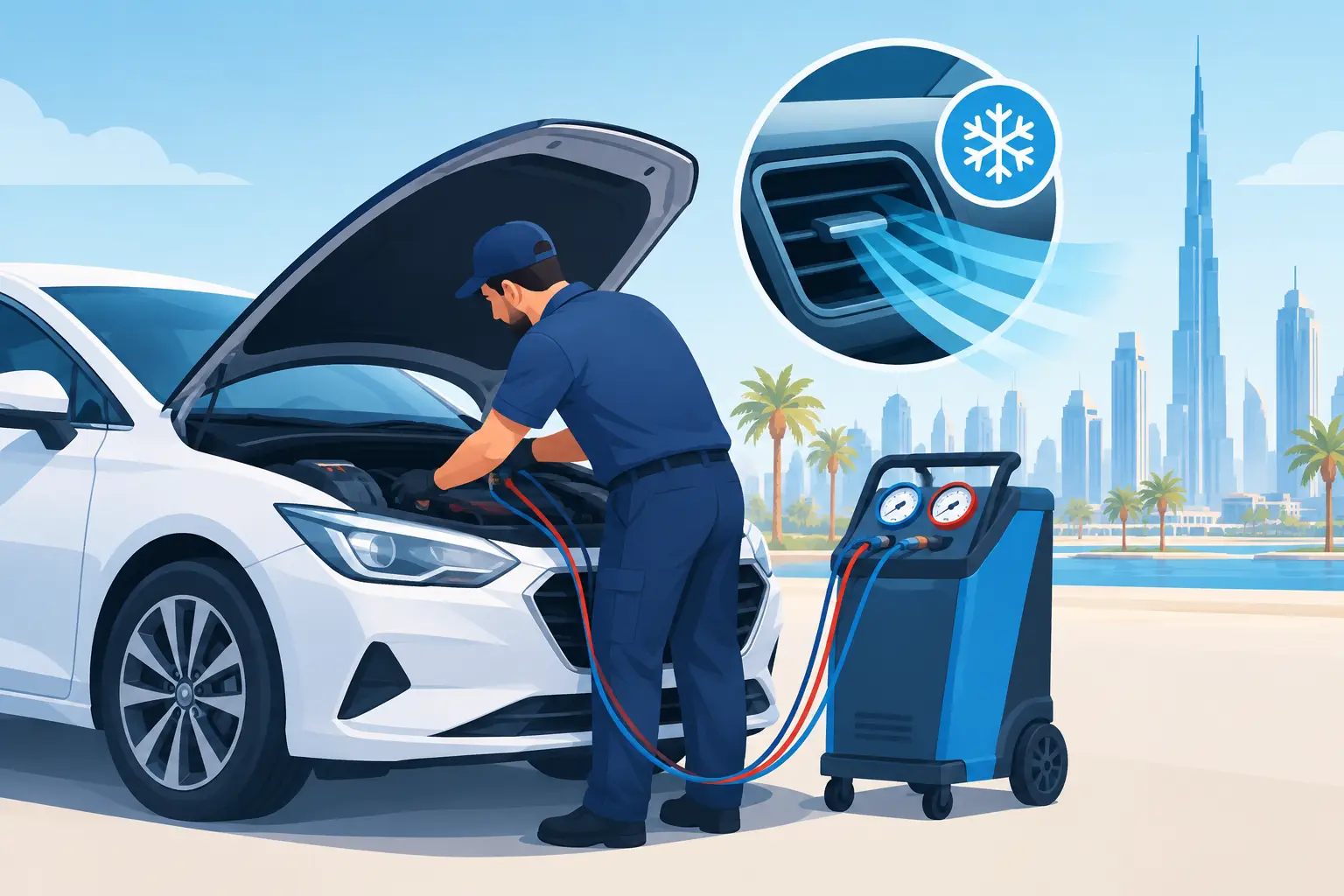
A weak air conditioner is not a minor inconvenience in Dubai. When cabin temperatures rise, airflow drops, or your AC starts blowing warm air at traffic lights, you need car ac repair that finds the actual fault – not a quick gas top-up that masks the problem for a few days. A properly repaired system should cool quickly, hold its temperature, and work reliably through daily commutes, school runs, and long highway drives.
Car AC Repair in Dubai Starts With Accurate Diagnosis
Vehicle AC systems are more complex than they appear. The compressor circulates refrigerant, the condenser releases heat, the evaporator cools the cabin air, and sensors, valves, fans, filters, and control modules keep the system operating within the correct range. A failure in one area can create symptoms that look like another problem.
For example, warm air may be caused by low refrigerant from a leak, but it can also come from a weak compressor, a blocked condenser, a failed cooling fan, a faulty expansion valve, or an electrical issue. Replacing parts before testing the system can add unnecessary cost and still leave you without cold air.
A specialist inspection should include pressure testing, electronic fault scanning where applicable, leak detection, compressor performance checks, blower operation, condenser fan checks, and a review of cabin temperature control. This targeted process matters even more for BMW, Mercedes-Benz, Audi, Porsche, Range Rover, Land Rover, Lexus, Cadillac, Jeep, Ford, Nissan, Toyota, and high-performance vehicles such as Ferrari, Bentley, Lamborghini, Maserati, and Rolls-Royce. Brand-specific systems often have different sensors, control logic, and component layouts.
Signs Your Car AC Needs Attention Now
Dubai heat makes small AC issues obvious quickly. If your system is no longer performing as it did last season, arrange an inspection before a minor fault becomes a compressor failure or a complete loss of refrigerant.
Watch for these common warning signs:
- Air stays warm or takes too long to become cold.
- Cooling is strong while driving but weak at idle or in traffic.
- Airflow from the vents is low, uneven, or noisy.
- The AC produces a musty odor when switched on.
- You hear clicking, squealing, rattling, or grinding when the compressor engages.
- Water leaks into the cabin or refrigerant leaks leave oily residue near AC components.
Not every symptom means the same repair. Weak airflow may point to a clogged cabin filter, dirty evaporator, failing blower motor, or damaged vent actuator. A bad smell can result from moisture and bacterial buildup on the evaporator, while a noise may signal a worn compressor clutch, bearing, or fan motor. The right repair depends on verified testing, not guesswork.
Common AC Faults We Repair
Refrigerant Leaks and AC Gas Refill
Low refrigerant is one of the most common reasons an AC stops cooling, but refrigerant does not normally disappear on its own. If a system needs frequent refilling, there is usually a leak at a hose, O-ring, condenser, evaporator, service port, compressor seal, or connection.
A proper repair identifies and fixes the leak first. Afterward, the system is vacuumed to remove air and moisture, then refilled with the correct refrigerant type and manufacturer-specified amount. Overfilling or using the wrong gas can reduce cooling performance and place unnecessary stress on expensive components.
Compressor Repair and Replacement
The compressor is the heart of the AC system. It pressurizes and circulates refrigerant, which is why compressor problems can lead to warm air, unusual noise, oil leaks, or a system that cycles on and off repeatedly.
Sometimes a compressor can be repaired by addressing the clutch, pulley, electrical supply, or control valve. In other cases, internal damage requires replacement. The sensible choice depends on the vehicle, the condition of the system, and whether debris has traveled through the refrigerant lines. When replacement is necessary, the system may also need flushing and supporting components may need inspection to protect the new compressor.
Condenser, Fan, and Cooling Problems
The condenser sits at the front of the vehicle and releases heat from the refrigerant. Dubai roads can expose it to dust, debris, stone damage, and extreme heat. A blocked or damaged condenser cannot shed heat efficiently, so the cabin may cool poorly, especially when idling.
Condenser fan faults produce a similar pattern. If the car cools better at highway speed than in slow traffic, the fan, fan control module, or airflow through the condenser should be checked. Cleaning, repair, or replacement may be needed depending on the test results.
Evaporator Cleaning and Blower Motor Repair
The evaporator cools the air before it reaches your vents. Dust, humidity, and regular use can leave contamination on its surface, causing odors, poor airflow, and reduced cooling. Professional evaporator cleaning helps restore clean airflow without treating the problem as a simple fragrance issue.
If fan speed is inconsistent or air barely comes through the vents, the blower motor, blower resistor, cabin filter, and air distribution controls need attention. These faults affect comfort even when the refrigerant circuit is working correctly.
Why Quick Fixes Often Cost More
A cheap refill can feel like a solution when cold air returns immediately. But if a leak remains, the refrigerant will escape again, cooling will fade, and the compressor may run under poor conditions. The next repair can be more involved than the original one.
The same applies to aftermarket parts chosen only for the lowest price. A high-grade replacement part can be a practical option for some vehicles, while premium German, luxury, and exotic models may benefit from genuine OEM components or manufacturer-equivalent parts. The right balance depends on availability, vehicle value, expected ownership period, and the component being replaced. Transparent advice should explain that trade-off before work begins.
A Better Repair Process for Dubai Drivers
Reliable AC work follows a clear sequence. First, the technician listens to the symptoms and checks cooling output. Next comes a complete inspection of refrigerant pressure, leaks, electrical controls, compressor engagement, fans, airflow, and temperature performance. Only after the fault is confirmed should repair options and pricing be provided.
Once approved, the repair should use suitable parts and correct refrigerant procedures. The system is then retested under operating conditions to confirm cold air, stable pressures, proper fan activity, and no active leaks. This final verification is especially valuable in Dubai, where an AC system that performs acceptably in a shaded workshop may struggle in afternoon traffic.
For drivers in Dubai Marina, Palm Jumeirah, JLT, JVC, Business Bay, Downtown, Al Barsha, Motor City, Arabian Ranches, Mirdif, DIFC, Al Wasl, and nearby areas, fast diagnosis matters because a vehicle without effective AC is difficult to use safely and comfortably. Mobile AC support can also be useful when your car is not practical to drive or the problem needs an initial on-site assessment.
How to Protect Your Vehicle AC System
Regular maintenance reduces the chance of a sudden failure during the hottest months. Run the AC regularly, even during cooler periods, because this helps circulate compressor oil and maintain seals. Replace the cabin air filter when airflow begins to drop, and keep the front condenser area clear of accumulated debris.
If you notice declining cooling, do not wait until the system blows completely warm. Early leak detection, evaporator cleaning, or fan repair is generally simpler than repairing damage caused by extended use with low refrigerant or poor airflow. A professional AC performance check before peak summer is a practical investment for both daily drivers and luxury vehicles.
Your car should deliver cold, clean, consistent air when Dubai temperatures climb. If it does not, book a specialist inspection early and get a repair plan based on real test results, fair pricing, quality parts, and work that is designed to last.